The farmer’s markets here in New Zealand are absolutely amazing. The ones I have known in Canada just don’t compare. In Calgary the farmer’s market was held in a giant warehouse-type building. This, of course, was as a result of the Canadian climate, so could not be helped, and certainly the Canadians were trying to make it feel market-like. The stall owners were a conglomerate of entrepreneurial-type people who had ambitions to sell goods to people at exorbitant prices. I think the market shoppers assumed that these higher prices indicated higher quality produce, or that they were supporting their local farmers, but in actual fact, most of the so-called “farmers” had never grown or made anything from scratch. Instead the “farmers” were grocery store-type employees, usually quite young and uninterested. The first-as-you-walk-in and biggest vendor at the Calgary market was a stall that paid a whole heap of employees to sell every kind of produce you’d find at any other grocery store in town, although sometimes in bigger quantities. It wasn’t locally sourced, or organic, or fresh. Most of it had been grown a lot farther away even, than the 1000km radius I was trying to abide by while living there. Other vendors were selling candy they’d bought in bulk (probably from Cost-Co), and fish they’d ordered from overseas. I do have to give some credit however to the Calgary Farmer’s Market, as at every Canadian market there were always a few Hutterite stalls, local carrot growers, as well as a few people that sold things they made themselves, for example; soap, beef jerky and bagels. My problem overall with the market was that it was hard to identify, sometimes, what was what, and generally speaking, the produce wasn’t any different from the stuff you would buy at Safeway on non-market days.
In New Zealand, on the other hand, there are very strict rules as to who can sell their wares at a farmer’s market. To make it an ‘authentic’ market, which Nelson’s Wednesday market is, there must be 80% certified local stall holders. The food which is being sold must be done so by a certified primary producer and must come from within a defined region. Vendors may also sell value-added products made by themselves using ingredients from a certified primary producer. So what this means is that the people selling goods at the markets here are the actual farmers and artisans themselves. They grow the produce and raise the cows, and make the cheese, and spin the yarn, and bake the bread themselves; a fantastic concept really.
As a result, what you get is a vibrant market, where the market vendors are keen and excited to be there. The vendors can tell you where the produce was grown, and how – that is, whether they used organic methods or not for example, and are keen to share their personal recipes, as they have a lot! Remember if they have enough to sell at the market then surely they are eating the veggies themselves, therefore they know exactly how to use the produce and are keen to share this knowledge. Today I bought some incredible looking giant orange mushrooms called “saffron milkcaps”. Something I had never tried before.
“When these mushrooms bruise they turn green,” the seller told me, “so don’t be alarmed if that happens. Here is a recipe for a soup using them.” Fantastic! Dinner plan made. I also tasted, and then bought, some chestnuts for the first time today. A big bag of them for $2! I’ve never bought chestnuts before because I’ve never known what to do with them. The only reference to chestnuts I know, in fact, comes from that old Christmas song about “chestnuts roasting on an open fire.” So I’ve always assumed I’d need to have a fireplace in order to prepare chestnuts for consumption. It turns out this is not true, a pot in the oven will do, but be sure to split the shell first, or you’ll have them exploding all over the place. I also bought three quinces for $1, but am not yet sure what to do with them. Apparently they need to be cooked, and are usually used in chutneys and sauces, to make them palatable. This will be my challenge for the week; to work out how to use the three quinces before market day comes around again.
To sum up, one of the things I love about the farmer’s market here is the advice and knowledge that comes along with my purchases. The market vendor can introduce me to, and then tell me exactly how to prepare, unusual produce.
Another thing I love about the market is the reduction of waste our family has participated in since deciding to shop there. Every week I buy two cartons of eggs from the egg vendor, and every week I return my previous two cartons for her to use again. So in total, we have disposed of no egg cartons in the past 7 months. The honey man will also re-use his honey jars and offers a 50 cent discount on the next jar when you return your previous one. As most vendors have no plastic bags to offer to shoppers, market-goers are encouraged to use reusable bags. The market is held outdoors year-round so no facility has to be heated and cooled throughout the year, reducing its energy consumption. Furthermore the bread man packages his bread in biodegradable packaging, and it goes on and on. As a result our family of five is producing one garbage bag full every five weeks. Even our recycling has been reduced to one box every two weeks. This is the first time since having our kids that our waste production is reducing, and it comes as a direct result from shopping at the market.
And finally, the thing I love most about shopping at the market is the social aspect. It has made me feel like part of the community when the lemon woman saves me her last six lemons, as she knows I am coming even if I am a bit later than usual. The egg woman welcomes me with “Hello Chelsie! How are you?” and the bread man gives me his experimental breads for free and a jar of home made jarred beets because I had previously asked him what to do with all the beets I had just bought for cheap off the organic guy. The organic guy has noticed I am interested in the process of growing market produce and has invited me out to his farm for a look, and has offered to answer any questions about organic produce production I may have. In return for supporting these friendly, pleasant market vendors, I get picked-today produce from conscientious growers who seem genuinely happy to be quizzed about their practices and creations.
One last comment on the farmer’s market here is that the prices at the market are actually cheaper than you’d find at the store, which makes sense as it is a direct transaction between grower and consumer, although the opposite was true of the Calgary Farmer’s Market. I bought a watermelon for $2 this week, and asked the watermelon guy pick out his best one for me. He grinned and started tapping on them, then passed me a perfect melon. I noticed today that watermelons are going for $5 at the grocery store, and there were no employees nearby to help me choose a nice one, not that any of them would know what a nice one looks like if they saw it, or would even look up at me for long enough for me to ask anything of them.
Thanks to Nelson’s Wednesday Farmer’s Market for a fabulous experience!

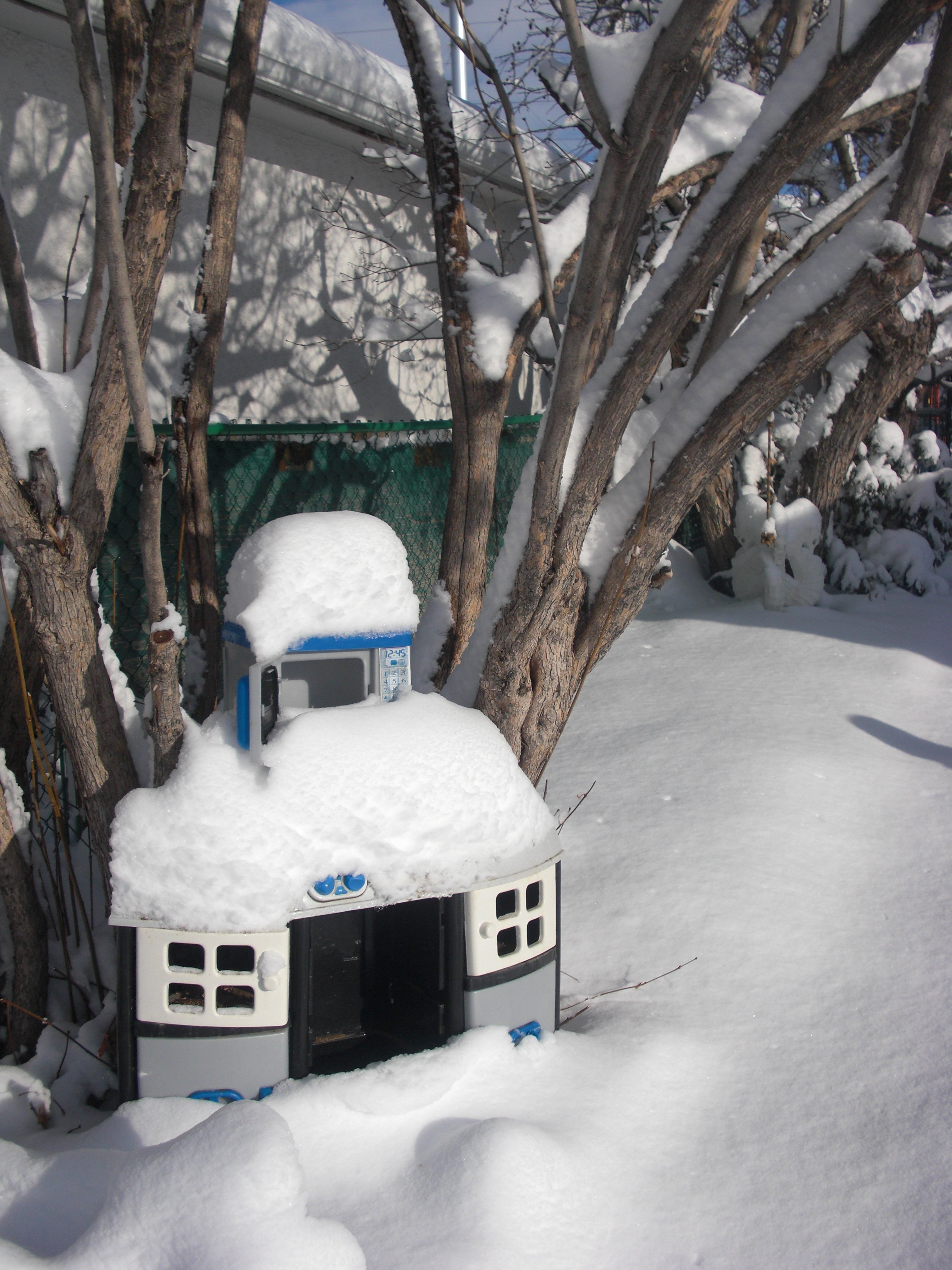 Then, the weekend arrived. Friday night it snowed (10cms!). Saturday it snowed (another 15 cms!). But by Sunday it was hot and people were in their t-shirts shoveling the heavy dump! On Tuesday the radio was announcing a risk of thunderstorms, so we tucked away the snow suits and pulled out the umbrellas.